
Current Gallery: Stuart & Georgian Tudor & Elizabethan / tudorelizabethan244

Use the scrollbar to explore costumes in this gallery or select a time period above to visit a different gallery.

Current Gallery: Stuart & Georgian Tudor & Elizabethan / tudorelizabethan244


Select a time period

Use the scrollbar to explore costumes in this gallery or select a time period above to visit a different gallery.

3 1685 80
  • Mary, Queen of Scots

    1971

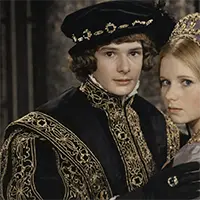
    Costume seen on Glenda Jackson as Elizabeth I

    • Twentieth Century Studios
    • Alexander, Michael and Ilya Salkind Productions

    The Four Musketeers: Milady's Revenge

    1974

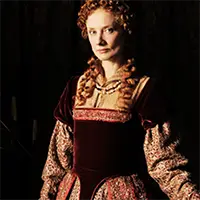
    Costume seen on Faye Dunaway as Milady de Winter

    • ITV
    • National Broadcasting Company (NBC)
    • Norman Rosemont Productions

    The Man in the Iron Mask

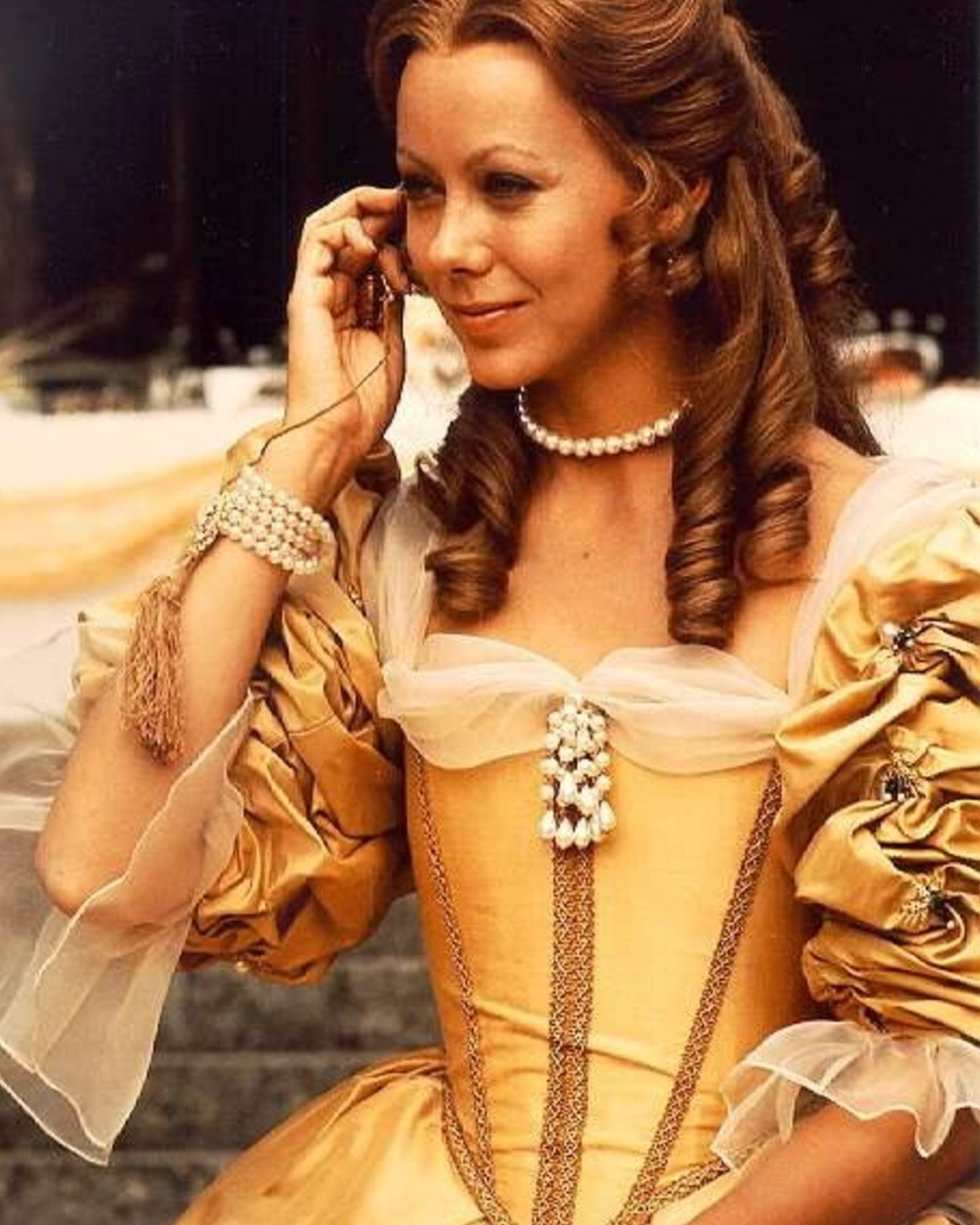
    1977

    Costume seen on Jenny Agutter as Louise de la Vallière

Additional Images

About the Costume

This yellow gown was designed by Margaret Furse for Glenda Jackson to wear as Queen Elizabeth I in the 1971 film Mary, Queen of Scots. The sleeves are distinctive and a hallmark of many of the gowns designed by Furse in several films for which she designed costumes.

The costume was made over – or perhaps – toned down, for use in the 1974 The Four Musketeers: Milady’s Revenge, where it was worn by Faye Dunaway as Milady de Winter. The parlet and ruffles on the sleeves have been removed, the underskirt swapped out, and some gold trim has been added to the front of the bodice. Nonetheless, it is those distinctive sleeves that give away the fact that these two gowns are the same. 

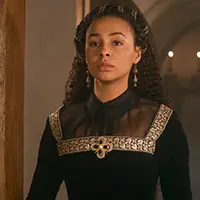
It was adapted yet again for the 1977 film The Man in the Iron Mask. The sleeves have been pulled up, with tulle added around the neckline and sleeves, when it was worn by Jenny Agutter as Louise de la Vallière.

This costume is an excellent example of the similarities and differences between a period, and how one costume can be made over to change with the times as needed. This costume, firmly Elizabethan at its start, is now very clearly Stuart in design.

About the Costume

Have you seen this gown somewhere else? Do you need to be given credit for this sighting? Do you have corrections, additions or changes you would like to make?

Have you ever watched a film and noticed a character walk by in a gown that you just know you’ve seen before? Recycled Movie Costumes is dedicated to documenting the life of a costume through its various appearances on film and television.

Additional Images

About the Costume

This yellow gown was designed by Margaret Furse for Glenda Jackson to wear as Queen Elizabeth I in the 1971 film Mary, Queen of Scots. The sleeves are distinctive and a hallmark of many of the gowns designed by Furse in several films for which she designed costumes.

The costume was made over – or perhaps – toned down, for use in the 1974 The Four Musketeers: Milady’s Revenge, where it was worn by Faye Dunaway as Milady de Winter. The parlet and ruffles on the sleeves have been removed, the underskirt swapped out, and some gold trim has been added to the front of the bodice. Nonetheless, it is those distinctive sleeves that give away the fact that these two gowns are the same. 

It was adapted yet again for the 1977 film The Man in the Iron Mask. The sleeves have been pulled up, with tulle added around the neckline and sleeves, when it was worn by Jenny Agutter as Louise de la Vallière.

This costume is an excellent example of the similarities and differences between a period, and how one costume can be made over to change with the times as needed. This costume, firmly Elizabethan at its start, is now very clearly Stuart in design.

This yellow gown was designed by Margaret Furse for Glenda Jackson to wear as Queen Elizabeth I in the 1971 film Mary, Queen of Scots. The sleeves are distinctive and a hallmark of many of the gowns designed by Furse in several films for which she designed costumes.

The costume was made over – or perhaps – toned down, for use in the 1974 The Four Musketeers: Milady’s Revenge, where it was worn by Faye Dunaway as Milady de Winter. The parlet and ruffles on the sleeves have been removed, the underskirt swapped out, and some gold trim has been added to the front of the bodice. Nonetheless, it is those distinctive sleeves that give away the fact that these two gowns are the same. 

It was adapted yet again for the 1977 film The Man in the Iron Mask. The sleeves have been pulled up, with tulle added around the neckline and sleeves, when it was worn by Jenny Agutter as Louise de la Vallière.

This costume is an excellent example of the similarities and differences between a period, and how one costume can be made over to change with the times as needed. This costume, firmly Elizabethan at its start, is now very clearly Stuart in design.

PRODUCTS YOU
MIGHT LIKE

This page contains affiliate links, meaning at no additional cost to you, Recycled Movie Costumes may earn a small commission. Learn more.

Featured media may not be suitable for all viewers. Viewer discretion and/or services such as VidAngel or The Story Graph are advised. Learn more.

Credits

Sighting Credit:
  • Katie S.
  • carsNcors
Photos provided by:
Costume Designer:
  • Margaret Furse

Disclaimer

This page contains affiliate links, meaning at no additional cost to you, Recycled Movie Costumes may earn a small commission. Learn more.

All intellectual property rights vests with the owner of the copyrighted material. Recycled Movie Costumes is not copying, distributing or using these materials except for entertainment purposes only and deems itself to be protected under the regulations of mandatory law (such as the right to quote), unless otherwise stated. We are happy to remove any material that the copyright owner/trademark owner feels is a violation of their statutory right. Before proceeding with legal measures, contact us at submissions@recycledmoviecostumes.com for us to assist with our cooperation.

The films/television/books and other media represented in the images on this site do not necessarily reflect the viewpoints of Recycled Movie Costumes, and may contain mature content. Viewer discretion is advised, and a service such as VidAngel that filters objectionable content from films and television is recommended. See our full list of suggested websites for navigating content in film, television and books here.

Leave a Comment

Costume Commentary

  1. This is it on Jenny Agutter as Louise de la Vallière in the 1977 Man in the Iron Mask, isn’t it?
    Also: Other than the pink Victorian gown used in the Tudors (remember that one?) or this mid-to-late 18th century robe sans undies used for 1680ies set ‘A little Chaos’ – and details aside – this is actually a nice example to reasonably tie the evolving but not wholly opposing silhouettes of, say 1580ies to 1660ies, together by showcasing how accessoirizing and ‘how-to-wear’ can shake things up.

    • Glad you saw this too! Saw this on Frock Flicks and said to myself “Wait…is that?” And yes indeed! I agree it’s going to be a really good example of evolving clothing! If I ever write a book this will be a wonderful example.

Comment

Costume Commentary

  1. This is it on Jenny Agutter as Louise de la Vallière in the 1977 Man in the Iron Mask, isn’t it?
    Also: Other than the pink Victorian gown used in the Tudors (remember that one?) or this mid-to-late 18th century robe sans undies used for 1680ies set ‘A little Chaos’ – and details aside – this is actually a nice example to reasonably tie the evolving but not wholly opposing silhouettes of, say 1580ies to 1660ies, together by showcasing how accessoirizing and ‘how-to-wear’ can shake things up.

    • Glad you saw this too! Saw this on Frock Flicks and said to myself “Wait…is that?” And yes indeed! I agree it’s going to be a really good example of evolving clothing! If I ever write a book this will be a wonderful example.

Comment

Make an Edit

Do you have more information to add to this page?
Do you have a brand new costume to share? 

Costume Commentary

  1. This is it on Jenny Agutter as Louise de la Vallière in the 1977 Man in the Iron Mask, isn’t it?
    Also: Other than the pink Victorian gown used in the Tudors (remember that one?) or this mid-to-late 18th century robe sans undies used for 1680ies set ‘A little Chaos’ – and details aside – this is actually a nice example to reasonably tie the evolving but not wholly opposing silhouettes of, say 1580ies to 1660ies, together by showcasing how accessoirizing and ‘how-to-wear’ can shake things up.

    • Glad you saw this too! Saw this on Frock Flicks and said to myself “Wait…is that?” And yes indeed! I agree it’s going to be a really good example of evolving clothing! If I ever write a book this will be a wonderful example.

Comment